
Guide · A busy mind at bedtime
How to stop overthinking at night
Seven gentle steps for a quieter mind in bed.
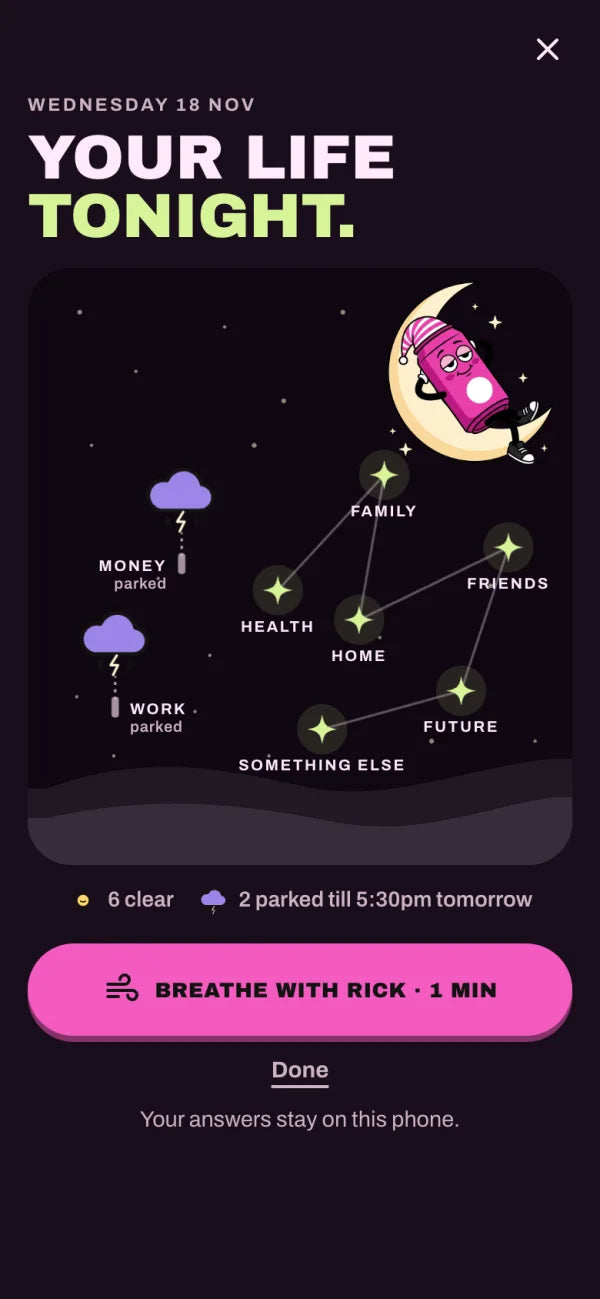
Tonight
Tonight, in 3 steps.
-
Write tomorrow down before bed
-
Breathe out for longer
-
Give your mind something gentle to follow
Read the short version
Get tomorrow out of your head early in the evening, give your worries a time slot the next day, breathe slowly in bed, and give your mind something gentle to follow, like a calm story or a short meditation. Turn the clock away.
The lights go off and your mind switches on: tomorrow, money, something you said years ago. It happens to most of us, and there are simple, gentle things that help a busy mind settle.
Your evening
From 6pm to 3am.
-
6pmWhen you get in
Three minutes to clock off
-
9pmAn hour before bed
A wind-down for how you feel
-
BedLights off
A calm story or a short meditation
-
3amIf you wake
A gentle way back to sleep
The science
Worth knowing.
-
9 in 10
When people who worry a lot tracked their worries, about 9 in 10 never came true.
LaFreniere & Newman, 2020 -
5 min
Five minutes writing tomorrow’s to-do list helped people fall asleep sooner.
Scullin et al., 2018
Step by step
Seven steps for a quieter mind.
-
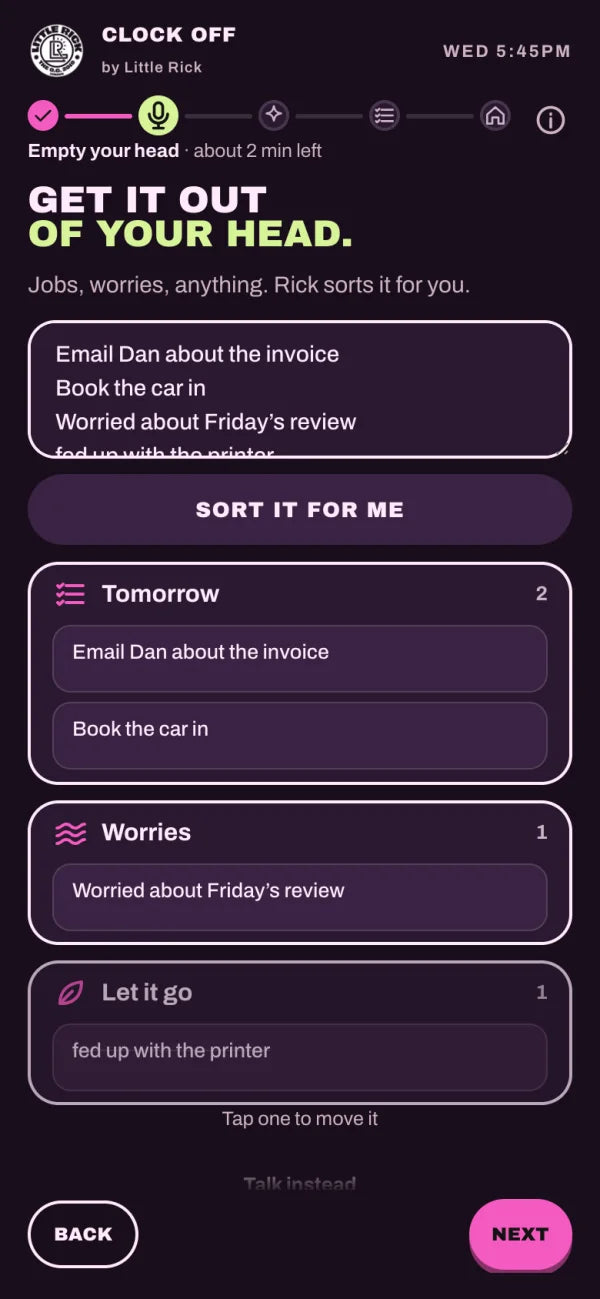
Write tomorrow down before bed
Jobs, worries, half-thoughts: get them onto a list.
More
Five minutes is enough, and your mind can stop rehearsing them.
The science Five minutes writing tomorrow’s to-do list helped people fall asleep sooner. Scullin et al., 2018
-
Give worries a time slot
More
Set ten minutes tomorrow for whatever’s on your mind, with one first step for each. When a worry turns up tonight, it can wait for its slot.
The science Writing a worry down early in the evening, with one next step, helps a busy mind settle by bedtime. Carney & Waters, 2006
-

Breathe out for longer
More
About six slow breaths a minute: in through your nose, then a long, slow breath out. Your body starts to settle before your thoughts do.
The science Breathing slowly, about six breaths a minute, switches on the body’s calming “rest and digest” system. Laborde et al., 2022
-
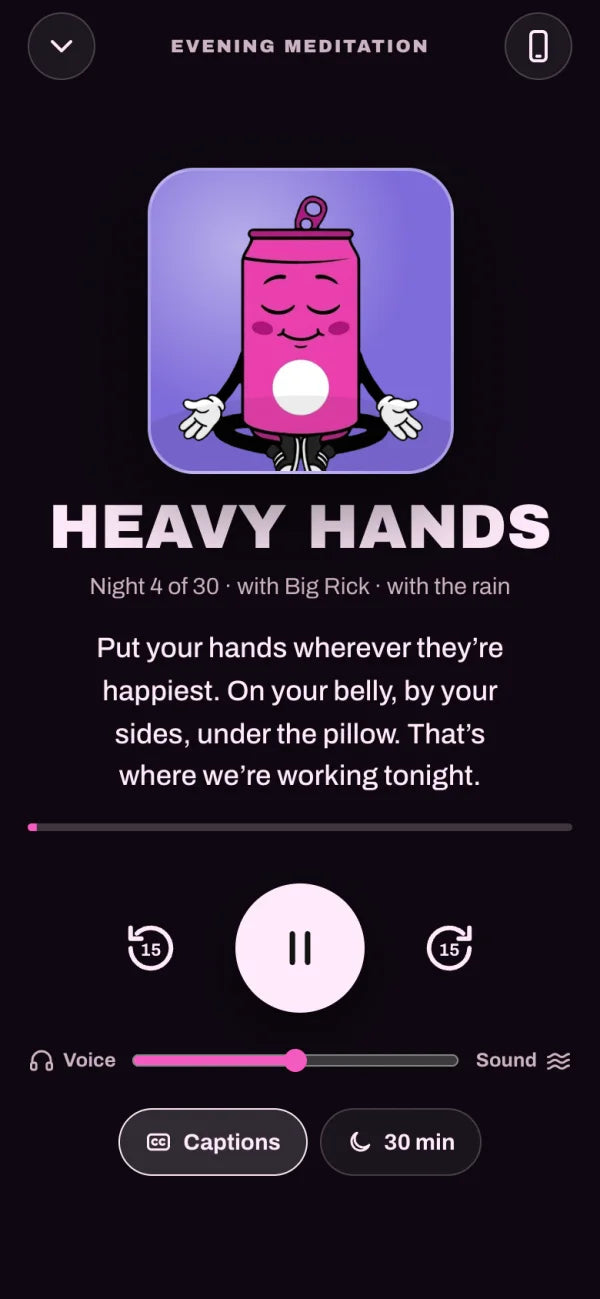
Let thoughts pass
Fighting a thought tends to keep it around.
More
Notice it, give it a name, like “planning” or “worrying”, and let it drift past like a car going by. That’s what a short sleep meditation helps you practise.
The science In a review of 18 trials, mindfulness meditation helped people sleep better. Rusch et al., 2019
-

Give your mind something gentle to follow
More
A calm story where nothing much happens, or soft sounds like rain or the sea, gives a busy mind somewhere easy to go.
The science A calm story or soft music gives your mind something gentle to follow at bedtime. Jespersen et al., 2022
-
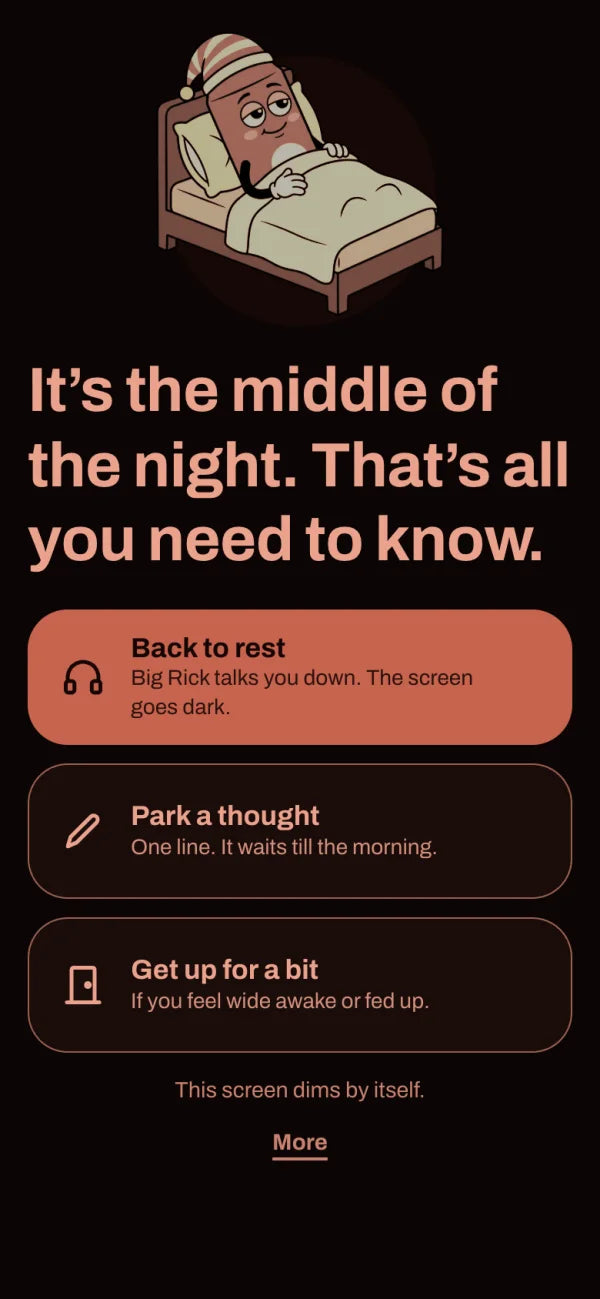
Turn the clock away
More
Checking the time starts the sums: “if I fall asleep now I’ll get five hours.” Turn the clock to the wall and leave the phone face down.
The science In a sleep study, people who weren’t watching the clock worried less in bed and dropped off sooner. Tang et al., 2007
-

Still wide awake? Get up for a bit
Somewhere dim, something calm, then back to bed when you feel sleepy.
More
Bed stays the place for sleep.
With Clock Off
How Clock Off quiets the evening.
-
Tomorrow, out of your head
More
Three minutes when you get in: say what’s on your mind and it becomes tomorrow’s list, each worry with a first step.
-
Worries wait their turn
More
Anything you park waits for ten quiet minutes the next day, so tonight you can let it go.
-
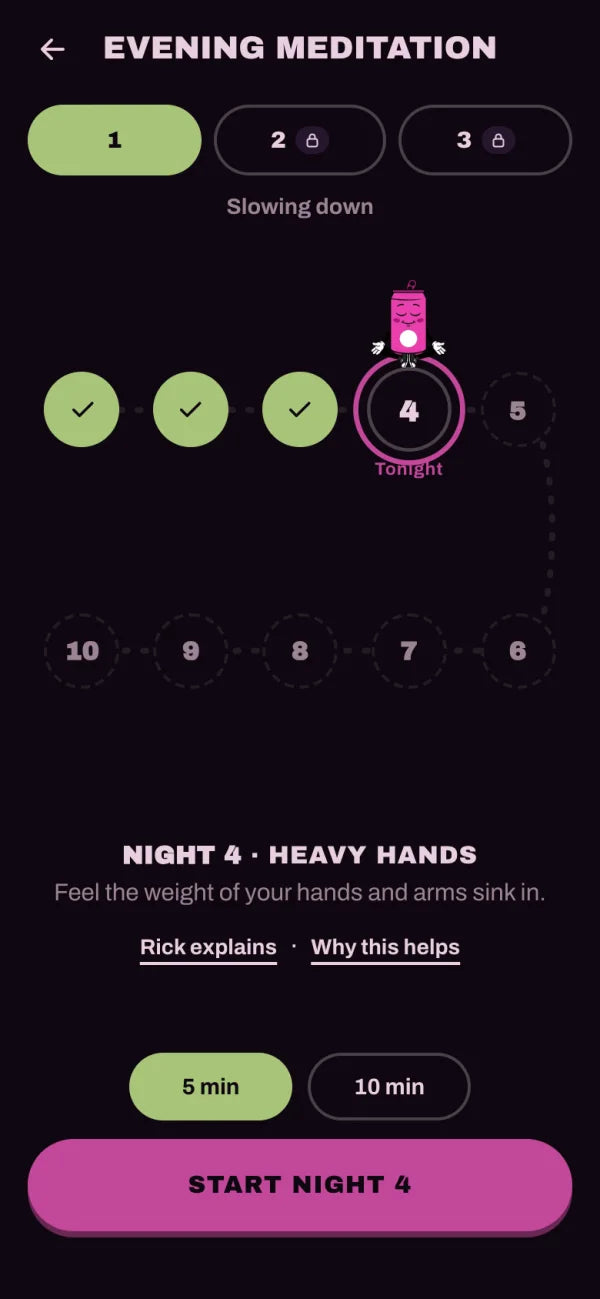
Meditation lying in bed
More
Five or ten minutes with the lights off and Big Rick’s slow voice: breathe out, let your body go heavy, let thoughts pass. The first 10 are free.
-
A way back at 3am
A dim screen with no clock.
More
Back to rest, park a thought, or get up for a bit, with a calm voice to talk you down.
Questions
Good questions.
Why do I overthink at night?
During the day you’re busy. At night it’s quiet and dark, with nothing else to do, so whatever’s unfinished comes back. Being tired can also make worries feel bigger than they really are.
How do I stop my mind racing when I’m trying to sleep?
Slow your breathing, with a long breath out. Let each thought pass rather than arguing with it, and give your mind something gentle to follow, like a calm story or a short meditation. If something important pops up, jot it down for tomorrow.
Is there an app for overthinking at night?
Yes. Clock Off is a free evening app that starts early: it gets tomorrow out of your head when you get home, parks your worries for the next day, and settles you in bed with Big Rick’s calm stories and short meditations. It works in your phone’s browser.
Can meditation help you sleep?
Yes. In a review of 18 trials, mindfulness meditation helped people sleep better. You don’t have to sit up for it: Clock Off’s evening meditations are done lying in bed, for 5 or 10 minutes.
What should I do if I wake at 3am and can’t stop thinking?
Keep the lights low and don’t check the time. Park the thought on a list for the morning, breathe slowly, and if you’re still wide awake after a while, get up for a bit somewhere dim. Clock Off’s 3am screen does just this, with no clock in sight.
When should I talk to someone about it?
If overthinking or poor sleep goes on for weeks and gets in the way of your days, your GP can help.
Sources (checked 20 November 2026)
Prices can differ by country and by where you buy. Check the price in your app store before you subscribe. Other apps’ names are used only to identify them.
- Clock Off by Little Rick: features and Clock Off+ prices (UK)
- Scullin et al. (2018), The effects of bedtime writing on difficulty falling asleep, Journal of Experimental Psychology: General
- LaFreniere & Newman, 2020
- Carney & Waters, 2006
- Laborde et al., 2022
- Rusch et al., 2019
- Jespersen et al., 2022
- Tang et al., 2007
